

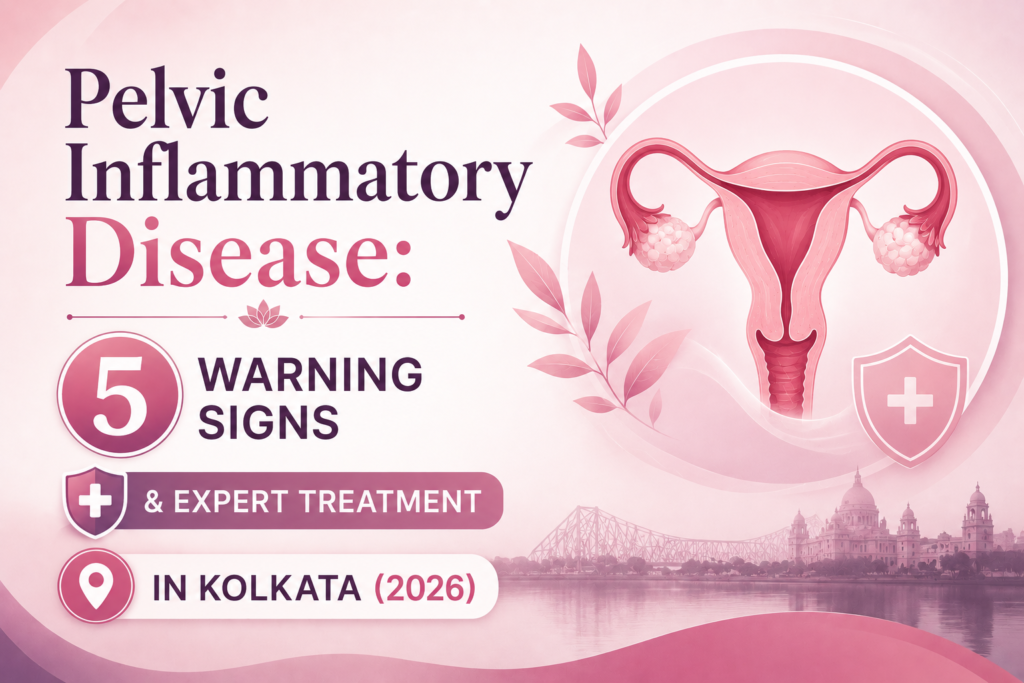
Pelvic inflammatory disease (PID) is an infection of the female upper reproductive tract — the uterus, fallopian tubes, ovaries, and surrounding tissue. It is one of the most common yet most underdiagnosed gynaecological conditions in India. Left untreated, PID causes permanent damage to the fallopian tubes, leading to infertility, chronic pelvic pain, and a dramatically increased risk of ectopic pregnancy.
The tragedy of PID is that it is very treatable when caught early. But because its symptoms are often mild, vague, or mistaken for normal period discomfort, many women delay seeking help — until the infection has caused irreversible damage.
How Pelvic Inflammatory Disease Develops
PID occurs when bacteria travel upward from the vagina and cervix into the uterus and tubes. The most common causes are sexually transmitted infections — particularly Chlamydia trachomatis and Neisseria gonorrhoeae. However, PID can also be caused by bacteria that normally live in the vagina (bacterial vaginosis organisms) when the cervical mucus barrier is disrupted — after childbirth, miscarriage, abortion, IUD insertion, or any surgical procedure on the uterus.
Risk factors include a history of STIs, multiple sexual partners, previous PID, recent uterine procedure, and age under 25 (higher STI rates and more permeable cervical mucus).
5 Warning Signs of PID — Do Not Ignore These
Warning Sign 1: Lower abdominal pain — bilateral or central PID causes a dull, aching pain in the lower abdomen — often on both sides (as both tubes are commonly affected). The pain may be constant or intermittent. It is frequently mistaken for menstrual cramps — particularly because it can worsen during periods. Unlike endometriosis pain which is cyclical, PID pain tends to be continuous and may worsen with intercourse or physical activity.
Warning Sign 2: Unusual vaginal discharge A change in vaginal discharge — increased volume, yellow or green colour, foul smell, or unusual texture — indicates infection. Any discharge that is different from your normal (which should be clear to white, odourless, and consistent) warrants evaluation by a gynecologist.
Warning Sign 3: Fever above 38°C (100.4°F) A temperature above 38°C alongside pelvic pain strongly suggests pelvic infection. This combination — fever + lower abdominal pain + abnormal discharge — is the classic PID triad that requires immediate medical evaluation.
Warning Sign 4: Pain during intercourse Cervical motion tenderness — pain when the cervix is moved during intercourse or examination — is one of the diagnostic criteria for PID. If intercourse has become suddenly more painful, particularly with deep penetration, and this is accompanied by any discharge or fever, PID must be ruled out.
Warning Sign 5: Irregular or heavier periods PID can disrupt normal uterine and ovarian function, leading to irregular bleeding, spotting between periods, or heavier than usual flow. These changes alongside pelvic pain should prompt immediate gynaecological evaluation.
Diagnosis
PID diagnosis is primarily clinical — based on symptoms and physical examination. The minimum criteria for diagnosis are: uterine tenderness, adnexal (tube/ovary) tenderness, and cervical motion tenderness on pelvic examination. Additional findings that support diagnosis include fever, elevated inflammatory markers (CRP, ESR, WBC count), and abnormal discharge with white blood cells on microscopy.
Pelvic ultrasound may show thickened tubes, free fluid, or a tubo-ovarian abscess (a collection of pus in the tube and ovary). Swab tests identify the causative organism and guide antibiotic selection.
In complex or unclear cases, laparoscopy provides definitive diagnosis and allows direct assessment of tubal damage.
Treatment
Antibiotics are the cornerstone of PID treatment. Most cases can be managed with oral antibiotics if the infection is mild-moderate and there is no abscess. Standard regimens combine 2-3 antibiotics to cover all likely organisms — because multiple bacteria are usually involved simultaneously.
The full course must be completed — typically 14 days. Many women feel better within a few days and stop the antibiotics early. This is dangerous — incompletely treated PID leads to recurrence, antibiotic resistance, and greater tubal damage.
Hospital admission is needed when:
- Tubo-ovarian abscess is present on ultrasound
- Severe symptoms with high fever and signs of sepsis
- Oral antibiotics cannot be tolerated (vomiting)
- Pregnancy is confirmed or cannot be excluded
- No improvement within 72 hours of oral antibiotic treatment
In hospital, intravenous antibiotics provide faster, more powerful coverage. A tubo-ovarian abscess may require drainage — either via ultrasound-guided aspiration or laparoscopic surgery.
Partner treatment is essential. If PID was caused by an STI, the sexual partner must be evaluated and treated — even if he has no symptoms. Without partner treatment, reinfection is almost certain.
Long-Term Consequences of Untreated PID
This is why early treatment matters so urgently. Even one episode of PID can cause:
Infertility — tubal scarring and blockage from PID accounts for 10-30% of female infertility cases. Risk increases with each PID episode — after 3 episodes, the infertility rate exceeds 50%.
Ectopic pregnancy — scarred fallopian tubes cannot transport the fertilised egg normally, increasing ectopic pregnancy risk 6-10 fold.
Chronic pelvic pain — pelvic adhesions from healed PID cause ongoing pain that can be debilitating. This pain — from adhesions rather than active infection — does not respond to antibiotics and may require laparoscopic adhesiolysis.
Recurrent PID — women who have had one episode have a 20-25% risk of recurrence, and each recurrence causes more damage.
When to See a Gynecologist Urgently
If you have lower abdominal pain + fever + unusual discharge — see a gynecologist in Kolkata the same day. Do not wait. PID is a medical urgency, not an emergency — but prompt treatment is critical to prevent permanent damage.
Dr. Juhi Dhanawat provides urgent evaluation for suspected PID at Neotia Bhagirathi, Rawdon Street and New Town, and Motherhood Hospital, Kasba, Kolkata. Her laparoscopic surgery expertise means she can manage complex cases including tubo-ovarian abscess requiring surgical drainage, and her infertility experience helps plan appropriate fertility preservation strategies after PID treatment.
Frequently Asked Questions
Q: Can PID be cured completely?
A: Yes, if treated early with appropriate antibiotics and partner treatment. However, the tubal damage caused by PID before treatment cannot be reversed. This is why early diagnosis and complete treatment are critical.
Q: Can I have PID without knowing it?
A: Yes. “Silent PID” — PID with minimal or no symptoms — is common, particularly with Chlamydia infections. This is why regular STI screening for sexually active women and routine gynaecological check-ups are important.
Q: Does PID always come from STIs?
A: No. While STIs (Chlamydia, Gonorrhoea) are the most common cause, PID can also result from bacteria that normally inhabit the vagina when the cervical barrier is disrupted — after uterine procedures, IUD insertion, childbirth, or miscarriage.
Q: How does PID affect fertility?
A: PID causes scarring and blockage of the fallopian tubes. After one PID episode, infertility risk increases by approximately 10-15%. After three episodes, over 50% of women experience infertility. Treatment immediately after diagnosis minimises this risk.
Q: Can I prevent PID?
A: You can significantly reduce risk by practising safe sex (condom use), getting regular STI screening if sexually active, getting appropriate treatment for vaginal infections before uterine procedures, and seeking early gynaecological evaluation for any unusual discharge or pelvic pain.
Dr. Juhi Dhanawat — Gynaecologist & Laparoscopic Surgeon, Kolkata. MS (KEM Mumbai), DNB, FMIGS (Germany). Consults at Neotia Bhagirathi, Rawdon Street and New Town, and Motherhood Hospital, Kasba, Kolkata.
Book: Call +91 8240886334 or visit drjuhidhanawat.in/book-anappointment/