

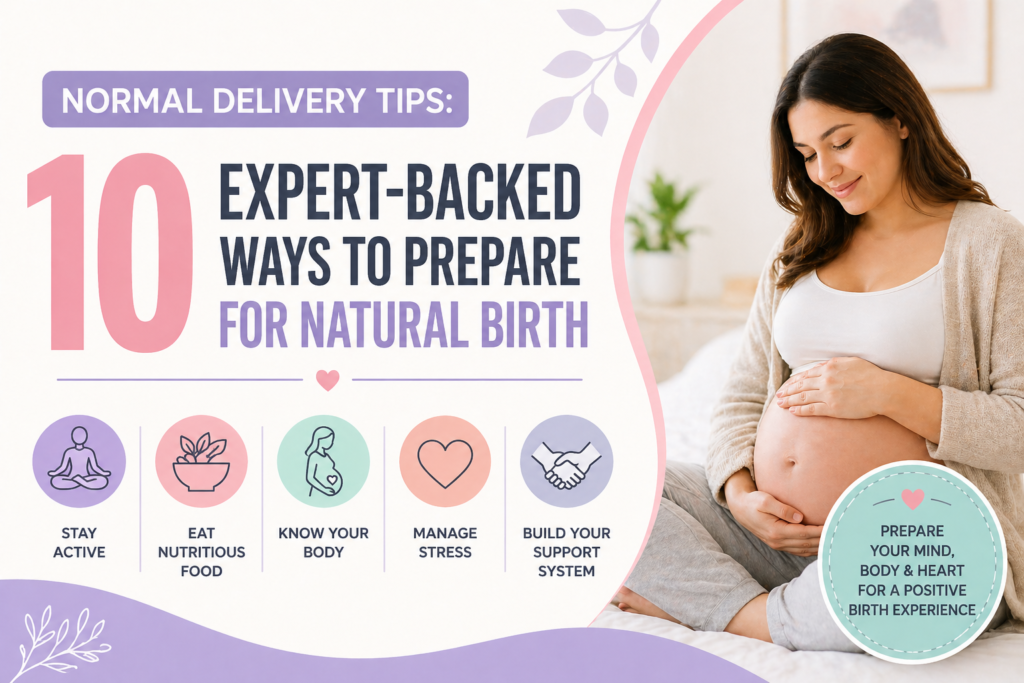
Every expecting mother in Kolkata asks the same question: “Will I have a normal delivery?” The honest answer is — it depends on several factors, but there is a LOT you can do to increase your chances. These normal delivery tips are not Instagram advice. They are evidence-based recommendations from a pregnancy doctor with 15+ years of delivery experience.
Normal vaginal delivery is the safest option when there are no complications. Recovery is faster, there is no surgical wound, breastfeeding starts earlier, and the bonding experience is immediate. If a normal delivery is your goal, start preparing early — not in the ninth month.
1. Choose the Right Doctor Early
Not every obstetrician has the same approach to delivery. Some gynecologists in Kolkata actively encourage and support normal delivery. Others default to cesarean for convenience. Ask your doctor directly during your first prenatal visit: “What is your normal delivery rate?” A doctor who supports natural birth will have a higher vaginal delivery rate and will discuss it openly.
2. Stay Physically Active Throughout Pregnancy
Walking 30 minutes daily is the single most effective exercise for normal delivery preparation. It strengthens your legs, improves stamina for labour, helps the baby move into the correct head-down position, and reduces constipation and swelling.
Prenatal yoga and pelvic floor exercises (Kegels) specifically prepare the muscles needed during labour. Join a prenatal exercise class or follow guided routines recommended by your obstetrician.
3. Attend Prenatal Classes
If your hospital offers prenatal or Lamaze classes, attend them. They teach breathing techniques for managing contractions, labour positions that help progress delivery, what to expect at each stage of labour, and when to push and when to rest. Knowledge reduces fear. Fear increases tension. Tension increases pain. Breaking this cycle starts with preparation.
4. Eat Right — Especially in the Third Trimester
Focus on dates (6 per day from week 36 — studies show this can shorten early labour), iron-rich foods to prevent anaemia (which weakens you during labour), protein for muscle strength, high-fibre foods to prevent constipation, and adequate water — 3 litres daily.
Avoid excessive weight gain. Your pregnancy doctor will guide you on healthy weight targets. Excessive weight makes labour harder and increases C-section risk.
5. Practice Perineal Massage
Starting from week 34, gentle perineal massage (the area between vagina and rectum) for 5-10 minutes daily helps stretch the tissue and reduce the risk of tearing during delivery. Your obstetrician or midwife can teach you the technique.
6. Stay Upright and Move During Early Labour
When contractions begin, do not lie down immediately. Walking, swaying, sitting on a birth ball, or standing in a warm shower helps the baby descend and the cervix dilate faster. Gravity is your friend during early labour.
7. Use Pain Management Wisely
Normal delivery does not mean you must suffer in silence. If your hospital offers epidural anaesthesia (painless delivery), discuss it with your doctor. An epidural can reduce pain while still allowing you to push effectively. Other options include warm compress on your lower back, breathing techniques, and massage during contractions. Hospitals like Neotia Bhagirathi and Motherhood Hospital in Kolkata offer epidural services.
8. Have a Supportive Birth Partner
Research consistently shows that having a supportive person — husband, mother, or doula — present during labour reduces the need for pain medication and C-section. Their role: encouragement, physical support, communication with the medical team, and emotional presence.
9. Trust Your Body and Your Doctor
Your body was designed for this. Millions of women deliver naturally every day. If your pregnancy has been healthy, your baby is in the correct position, and your obstetrician confirms you are a good candidate — trust the process.
At the same time, trust your doctor if they recommend a cesarean during labour. Sometimes labour does not progress as expected, or the baby shows signs of distress. A good doctor will try everything for a normal delivery but will prioritize safety above all.
10. Choose the Right Hospital
Your hospital should have continuous fetal monitoring during labour, immediate access to an operation theatre if emergency C-section is needed, a Level III NICU for the newborn, and anaesthesia available 24/7. In Kolkata, Neotia Bhagirathi (Rawdon Street and New Town) and Motherhood Hospital (Kasba) are dedicated maternity hospitals with all these facilities.
Dr. Juhi Dhanawat consults at both hospitals and actively supports normal delivery for eligible patients. With training from KEM Hospital Mumbai — one of India’s busiest maternity centres — she has the experience to guide you through labour safely and confidently. Her additional expertise in laparoscopic surgery and endometriosis care also means she can handle any complication that arises.
Frequently Asked Questions
Q: Can I have a normal delivery after a previous C-section? A: Yes, in many cases. This is called VBAC (Vaginal Birth After Cesarean). It depends on the type of previous C-section incision, the reason for the previous C-section, and the current pregnancy’s health. Discuss this specifically with your obstetrician.
Q: What increases the chances of needing a C-section? A: Factors include baby in breech position, placenta previa, very large baby, maternal conditions like severe preeclampsia, previous complicated C-section, and failure of labour to progress despite adequate contractions.
Q: Is painless delivery (epidural) safe for normal delivery? A: Yes. Epidural anaesthesia is safe and widely used. It reduces labour pain significantly while allowing you to remain conscious and push effectively. It does not increase C-section risk when administered properly.
Q: When should I go to the hospital during labour? A: Generally when contractions are regular (every 5 minutes), lasting 1 minute each, for at least 1 hour. Also go immediately if your water breaks, you have vaginal bleeding, or you notice decreased baby movement. Call your doctor for guidance.
Q: Does walking during pregnancy really help normal delivery? A: Yes. Walking strengthens leg muscles, improves cardiovascular stamina for labour, helps the baby engage in the pelvis, and can help progress early labour. Aim for 30 minutes daily throughout pregnancy unless your doctor advises otherwise.
Dr. Juhi Dhanawat — Gynaecologist & Obstetrician, Kolkata. MS (KEM Mumbai), DNB, FMIGS (Germany). Consults at Neotia Bhagirathi, Rawdon Street and New Town, and Motherhood Hospital, Kasba, Kolkata.
Book a consultation: Call +91 8240886334 or visit drjuhidhanawat.in/book-anappointment/