

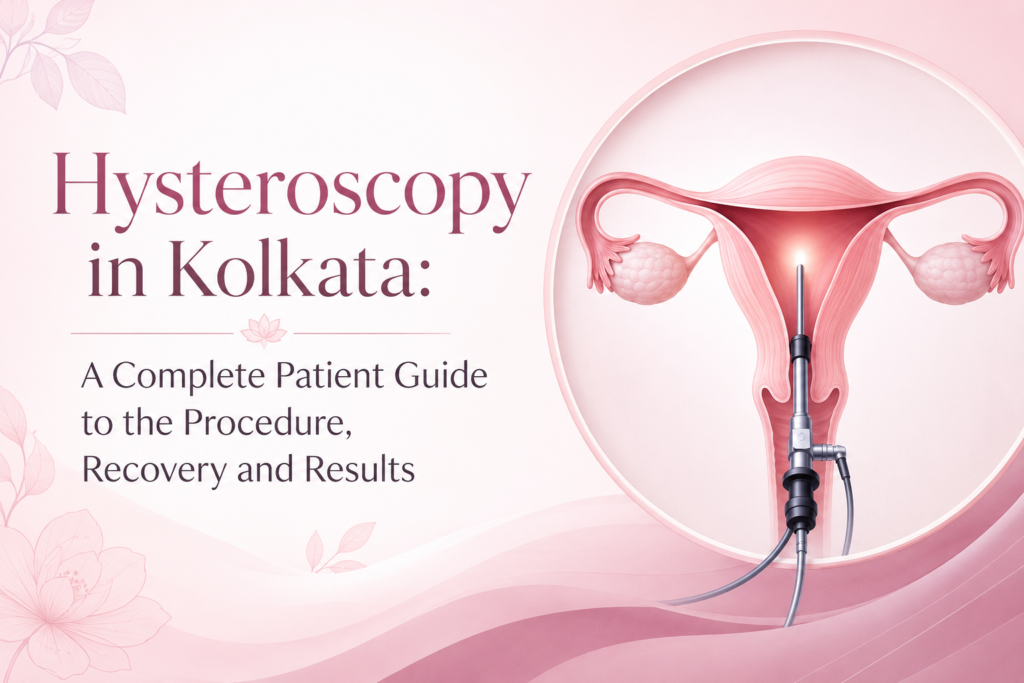
Hysteroscopy is one of the most useful and underexplained diagnostic and surgical procedures in gynaecology. Many patients are referred for a hysteroscopy by their gynaecologist and arrive at the procedure with very little understanding of what will happen, what will be found, or what recovery involves. This guide explains everything clearly — what hysteroscopy is, what it can diagnose and treat, what the procedure feels like, what recovery involves, and when it is the right next step for specific gynaecological problems.
What Is Hysteroscopy?
A hysteroscope is a thin, lighted telescope — typically 3-5 mm in diameter — that is passed gently through the cervical canal into the uterine cavity. A camera attached to the hysteroscope displays the interior of the uterus on a monitor, allowing the gynaecologist to directly visualise the uterine lining, the cavity shape, the tubal openings, and any abnormalities within the uterus.
The procedure can be diagnostic (looking only) or operative (treating while looking). Many abnormalities that are identified during a diagnostic hysteroscopy can be treated in the same session — removing polyps, cutting adhesions, or taking a biopsy — without requiring a separate surgical admission.
What Hysteroscopy Can Diagnose and Treat
Uterine polyps — small benign growths on the uterine lining that cause abnormal bleeding (including bleeding between periods, after intercourse, or after menopause) and can impair fertility. Polyps are visible immediately during hysteroscopy and can be removed in the same procedure using a resectoscope or polypectomy forceps. Most patients experience significant improvement in bleeding symptoms after polyp removal.
Uterine fibroids (submucosal) — fibroids that project into the uterine cavity (as opposed to those within the wall or outside the uterus) are identifiable and, depending on size, treatable via hysteroscopy. Submucosal fibroids are strongly associated with heavy periods and implantation failure in women trying to conceive. Hysteroscopic myomectomy removes these without any external incision.
Intrauterine adhesions (Asherman’s Syndrome) — scar tissue within the uterine cavity from previous surgery, infection, or D&C procedures. Adhesions reduce the uterine cavity volume, interfere with normal menstruation (periods become scanty or absent), and significantly impair implantation. Hysteroscopic adhesiolysis — cutting and removing the scar tissue under direct vision — is the treatment of choice.
Uterine septum — a fibrous wall dividing the uterine cavity, present from birth. A septum is strongly associated with recurrent miscarriage and is one of the most important treatable structural causes. Recurrent miscarriage evaluation should include uterine assessment — a septum found and corrected by hysteroscopic resection can transform the reproductive outcome.
Abnormal uterine bleeding — when heavy periods, irregular bleeding, or postmenopausal bleeding occurs, hysteroscopy combined with endometrial biopsy provides definitive assessment of the uterine lining, ruling out hyperplasia and malignancy while identifying structural causes.
Failed IVF implantation — many fertility specialists now recommend hysteroscopy prior to IVF cycles when previous cycles have failed or when the uterine cavity has not been recently assessed. Studies show that hysteroscopy in the cycle preceding IVF increases live birth rates by identifying and treating previously undetected intrauterine pathology.
Diagnostic vs Operative Hysteroscopy
Diagnostic hysteroscopy can be performed in an outpatient setting without general anaesthesia in many cases — particularly with newer thin-scope technology. A diagnostic scope passes through the cervix without dilation in most women, making the procedure feasible with local anaesthesia or mild sedation. Recovery is same-day.
Operative hysteroscopy — when treatment is performed (removing a polyp, cutting adhesions, resecting a fibroid or septum) — is typically performed under general anaesthesia as a day-case procedure. The operative instruments used through the hysteroscopic channel require a slightly larger cervical dilation. Recovery remains short — most patients return to normal activity within 1-2 days.
The decision about anaesthesia approach depends on the planned procedure, the patient’s cervical accessibility, and patient preference. This should be discussed explicitly at the pre-procedure consultation.
What the Procedure Involves
A hysteroscopy typically takes 10-30 minutes depending on whether it is diagnostic or operative. The uterine cavity is distended with a fluid medium (saline) to allow adequate visualisation. The procedure is performed in a sterile environment — operating theatre for operative cases, procedure room for diagnostic outpatient cases.
Patients may experience cramping during and immediately after the procedure — comparable to period pain. Mild spotting is normal for 2-5 days afterward. Normal activities can be resumed within 24-48 hours.
When to Request a Hysteroscopy
Hysteroscopy is the appropriate next investigation when: abnormal uterine bleeding does not respond to medical management or has no explanation on ultrasound; infertility evaluation identifies a uterine cavity abnormality on ultrasound or HSG; recurrent miscarriage investigation reveals a potential structural uterine cause; IVF is planned and the uterine cavity has not been recently assessed; endometrial biopsy is needed for clinical decision-making.
Hysteroscopy is available at Neotia Bhagirathi Woman and Child Care Centre, Rawdon Street and New Town, and Motherhood Hospital, Kasba, Kolkata. Consultation for gynaecological procedures and surgical planning is available at all three locations.
Frequently Asked Questions
Q: Is hysteroscopy painful?
A: Diagnostic outpatient hysteroscopy causes cramping similar to period pain during the procedure and mild discomfort afterward. Operative hysteroscopy under general anaesthesia involves no intraoperative discomfort. Most patients rate the experience as manageable with appropriate pre-procedure explanation and preparation.
Q: Can hysteroscopy improve fertility?
A: Yes, when there is an intrauterine cause for infertility. Polyps, submucosal fibroids, adhesions, and uterine septum all impair fertility — and their treatment by hysteroscopy improves natural conception rates and IVF success rates.
Q: Is hysteroscopy a major surgery?
A: No. Operative hysteroscopy is a day-case procedure. Patients go home the same day and return to normal activities within 1-2 days. Diagnostic hysteroscopy may not even require general anaesthesia.
Q: How soon can I try to conceive after hysteroscopy?
A: This depends on the procedure performed. After simple polyp removal, most gynaecologists recommend waiting one full menstrual cycle (approximately 4-6 weeks) before attempting conception. After adhesiolysis or septal resection, a longer healing period with hormonal support may be recommended.
Q: Does hysteroscopy replace ultrasound?
A: No — they complement each other. Ultrasound is the standard first-line investigation for uterine assessment. Hysteroscopy provides definitive direct visualisation when ultrasound findings are inconclusive or when treatment is needed. Some findings visible on hysteroscopy (small polyps, mild adhesions) are missed on ultrasound.
Book: Call +91 8240886334 or visit drjuhidhanawat.in/book-anappointment/
INTERNAL LINKS: gynaecology services | robotic surgery | endometriosis care | PCOS treatment | irregular periods | heavy bleeding