

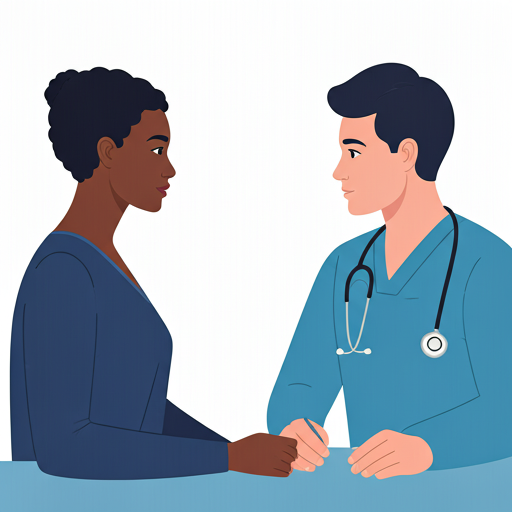
You have been trying to get pregnant for months — maybe longer. Your periods are painful, sometimes unbearably so. A doctor mentions endometriosis as a possible cause. Suddenly you are searching the internet at 2 AM, reading conflicting information, and feeling overwhelmed. Can you still have a baby? Do you need surgery? Will IVF be necessary?
If this sounds familiar, you are not alone. Endometriosis and infertility are closely connected — endometriosis is found in approximately 30 to 50 percent of women who struggle with infertility. But here is what the panic-inducing articles often fail to mention: the majority of women with endometriosis can and do become pregnant, especially with the right medical guidance.
This article gives you five evidence-based facts about the relationship between endometriosis and fertility — written by a gynaecologist with fellowship training in endometriosis from France and over 15 years of clinical experience.
Fact 1 — Endometriosis Is Found in Up to Half of All Women With Infertility
Endometriosis is a condition where tissue similar to the lining of the uterus grows outside the uterus — on the ovaries, fallopian tubes, pelvic lining, bowel, and in severe cases, on the pelvic nerves. This misplaced tissue responds to hormonal changes during the menstrual cycle, causing inflammation, scarring, and adhesions.
The connection between endometriosis and infertility is well established. Studies consistently show that 30 to 50 percent of women with endometriosis experience difficulty conceiving. The mechanisms are multiple: endometriosis can damage the ovaries and reduce egg quality, block or distort the fallopian tubes, create adhesions that prevent the egg from reaching the tube, alter the pelvic environment in ways that impair fertilisation, and affect the uterine lining’s ability to support implantation.
However, the severity of infertility does not always correlate with the stage of endometriosis. Some women with minimal endometriosis (Stage I) struggle to conceive, while some with severe disease (Stage IV) become pregnant naturally. This is why individualised assessment by a specialist is essential.
Fact 2 — Severe Period Pain Is NOT Normal and Could Be Your First Warning
The most common symptoms of endometriosis include progressively worsening period pain, pain during intercourse, pain with bowel movements or urination during periods, heavy or irregular bleeding, and chronic pelvic pain between periods. Many women experience these symptoms for years before receiving a diagnosis — the average delay is seven to ten years from symptom onset.
The reason for this delay is that period pain is widely normalised in Indian culture. Women are told that painful periods are just something to endure. By the time they seek help for infertility, the endometriosis may have progressed significantly, causing more damage to the reproductive organs.
If you have severe period pain AND are planning to conceive in the future, do not wait until you are actively trying. See an endometriosis specialist now. Early diagnosis and treatment can preserve your fertility and prevent disease progression.
Fact 3 — Not Every Woman With Endometriosis Needs Surgery Before Trying to Conceive
The treatment approach for endometriosis-related infertility depends on several factors: your age, the duration of infertility, the stage and location of endometriosis, whether your fallopian tubes are open, your partner’s sperm parameters, and your ovarian reserve.
For women under 35 with mild endometriosis (Stage I-II) and open tubes, the first approach may be timed intercourse with or without ovulation stimulation, combined with lifestyle optimisation. If this does not succeed within six months, further intervention is considered.
For women with moderate to severe endometriosis (Stage III-IV), large ovarian endometriomas (chocolate cysts), or tubal damage, surgical treatment may be recommended before attempting conception. The goal of surgery is to remove endometriotic tissue, restore normal anatomy, drain or excise endometriomas, and free adhesions — giving natural conception the best chance.
For women over 35 or those with significant ovarian reserve depletion, time is a critical factor. In these cases, moving directly to IVF may be more appropriate than spending months on conservative approaches. Your specialist should discuss this timeline openly with you.
The critical point is that there is no single correct approach. Treatment must be personalised based on your specific situation — and this is where the expertise of the specialist matters most.
Fact 4 — When Surgery Is Needed, the Surgeon’s Skill Determines the Outcome
If surgical treatment is recommended for endometriosis-related infertility, the technical skill of the surgeon directly impacts your fertility outcome. This is not a generalisation — it is supported by evidence.
Excision surgery — where the endometriotic tissue is carefully cut out — is superior to ablation (burning) because it removes the disease more completely and allows for histological confirmation. Laparoscopic surgery is preferred over open surgery because it causes less adhesion formation, and post-surgical adhesions themselves can impair fertility.
For ovarian endometriomas, the surgical technique must balance complete cyst removal with preservation of healthy ovarian tissue. Aggressive surgery that removes too much ovarian tissue can reduce your egg reserve — the very thing you are trying to protect. An experienced endometriosis surgeon understands this balance.
For deep infiltrating endometriosis — particularly when it involves the bowel, bladder, or pelvic nerves — the surgery requires even more specialised expertise. Incomplete removal leads to recurrence, while overly aggressive surgery risks nerve damage and organ injury.
Dr. Juhi Dhanawat holds a Fellowship in Endometriosis from France and a Masters in Neuropelveology from Switzerland, giving her the ability to handle both the reproductive and neurological aspects of complex endometriosis. She performs advanced laparoscopic and robotic excision surgery at Neotia Bhagirathi Woman and Child Care Centre, Rawdon Street and New Town, and at Motherhood Hospital, Kasba, Kolkata.
Fact 5 — IVF Is an Effective Option When Other Approaches Have Not Worked
For women with endometriosis who have not conceived after optimised natural attempts or post-surgical recovery, in-vitro fertilisation offers excellent success rates. IVF bypasses many of the mechanisms by which endometriosis impairs fertility — it does not rely on tubal function, it overcomes the hostile pelvic environment, and it allows direct selection of the best quality eggs and embryos.
Studies show that IVF success rates for women with endometriosis are slightly lower than for women with other causes of infertility, but they remain good — particularly when the endometriosis has been surgically treated before the IVF cycle.
The timing of IVF relative to surgery, the ovarian stimulation protocol, and the decision about fresh versus frozen embryo transfer should all be discussed with your fertility team. If your treating gynaecologist does not offer IVF directly, they should work in coordination with a reproductive medicine specialist to ensure the best outcome.
What You Should Do Next
If you have endometriosis and are trying to conceive — or planning to in the future — the single most important step is to consult a gynaecologist who specialises in endometriosis. Not every gynaecologist has the training or surgical skill to manage endometriosis-related infertility effectively.
Look for a specialist with demonstrated fellowship training in endometriosis, experience with laparoscopic excision surgery, and an understanding of the fertility implications of every treatment decision. If your endometriosis is complex — involving deep infiltration, the bowel, or the pelvic nerves — seek a specialist who also has neuropelveological training, as nerve-sparing surgery preserves bladder and sexual function during the procedure.
Your diagnosis is not your destiny. With the right specialist, the right approach, and the right timing, pregnancy with endometriosis is achievable for the majority of women.
Frequently Asked Questions
Q: Can I get pregnant naturally with endometriosis? A: Yes. Many women with endometriosis — particularly those with mild to moderate disease — conceive naturally. The likelihood depends on the stage and location of endometriosis, your age, ovarian reserve, and whether the fallopian tubes are open. Early diagnosis and treatment improve your chances significantly.
Q: Does endometriosis surgery improve fertility? A: In many cases, yes. Surgical removal of endometriotic tissue, adhesions, and ovarian cysts can restore normal anatomy and improve the chances of natural conception. However, the surgeon’s skill is critical — poorly performed surgery can cause more adhesions and reduce ovarian reserve. Choose a fellowship-trained endometriosis surgeon.
Q: Should I do IVF or try naturally after endometriosis surgery? A: This depends on your age, ovarian reserve, the severity of endometriosis, and how long you have been trying. Women under 35 with mild endometriosis may try naturally for six months after surgery. Women over 35 or with significant disease may benefit from moving to IVF sooner. Your specialist should guide this decision based on your individual factors.
Q: Can endometriosis come back after surgery? A: Yes. Endometriosis recurrence rates are approximately 20 to 40 percent within five years of surgery. This is why surgical technique matters — complete excision has lower recurrence rates than ablation. Post-surgical medical management with hormonal therapy can reduce recurrence risk. For women trying to conceive, the window after surgery is the optimal time for attempting pregnancy.
Q: Does endometriosis affect egg quality? A: Endometriosis — particularly ovarian endometriomas — can negatively impact egg quality and ovarian reserve. Inflammatory mediators produced by endometriotic tissue may damage developing eggs. This is why preserving ovarian tissue during surgery and considering fertility preservation (egg freezing) may be discussed if you are not ready to conceive immediately.